
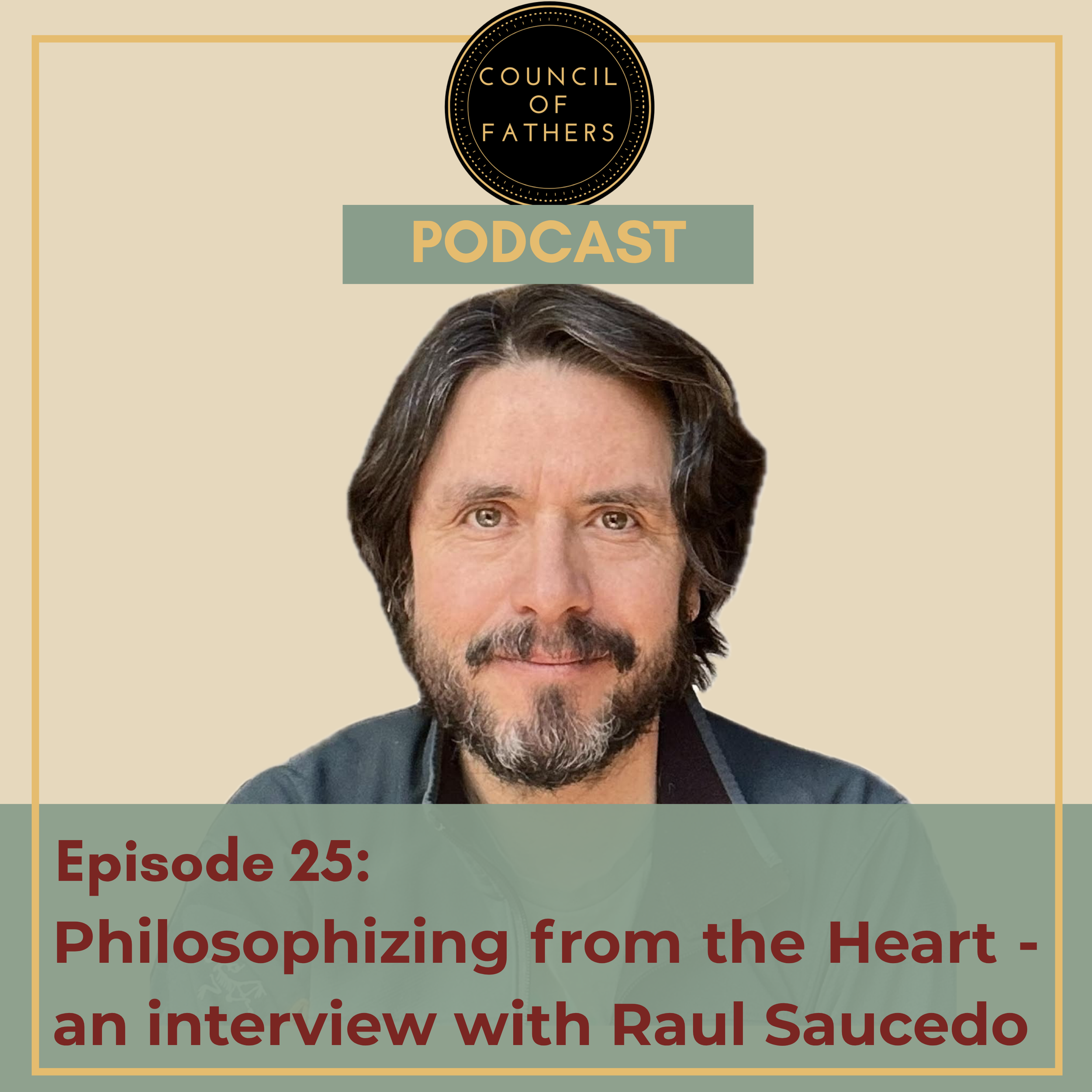
In this episode, our friend Raul Saucedo, a philosophy professor at CU Boulder and dad of two boys, joins us. Raul sees philosophy as something you practice, not something you learn: a loving, systematic reflection on what matters.
Together we explore how every dad is already living out a personal philosophy, whether he knows it or not.
We talk about why examining inherited beliefs can feel like the walls of your house coming down, and how we can raise kids who think for themselves instead of absorbing whatever gets the most clicks.
Along the way: gardeners vs. carpenters, super-glued Jenga towers, and why you might rather your kid learn some lessons in eighth grade.
What does philosophy have to do with changing diapers, navigating middle school parties, or breaking the cycles we inherited? More than you’d think. Raul Saucedo, a professor of philosophy at CU Boulder and father of two boys becoming men, joins Noah and Dave to explore the “love of wisdom” as a daily practice for dads.
In this episode:
Philosophy as a practice, not information (~00:02): why reflection, which looks at something from many angles, is different from analysis, which works toward an end, and why “love” matters as much as “wisdom”
You already have a personal philosophy (~00:15): having guiding principles lets us respond instead of react. Noah shares the exercise that revealed one of his unspoken principles: avoid conflict
Want to know what you really live by? Watch your reflexive behavior (~00:18)
When beliefs and identity are tangled together (~00:22): why examining what we believe can be so destabilizing. Noah shares a dream about walking into his house and finding no walls, and the “box from your old house” metaphor for developmental leaps, in ourselves and in our kids
Community as scaffolding (~00:27): why we’ve always raised kids in villages, and what it means to fall apart with people around to catch you
Super-glued Jenga blocks (~00:30): modernity, the manosphere, and why some men cling to beliefs that cause harm. Plus Dave coins the “fathersphere”
Archetypes and the algorithm (~00:36): the models of masculinity our kids absorb from media, and how we can become the archetype we want to pass down. The warrior in service of domination vs. the warrior in service of liberation
Helping kids philosophize (~00:42): it doesn’t look like a seminar. It looks like “Let’s think about it together.” Dave shares how he handled Rafi asking to go to a party
The gardener and the carpenter (~00:48): Alison Gopnik’s metaphor for parenting, and why taller and taller fences teach our kids to stop talking to us
Building their immune system (~00:52): shame-free homes, sitting with our own discomfort, and why you might rather your kid learn some lessons in eighth grade than in tenth
Raul’s wish for fathers (~01:00): create small spaces for reflection. Did I want to say that? Did I want to say it that way?
Mentioned in this episode:
The Gardener and the Carpenter by Alison Gopnik
Fathering from the Heart, our 12-week journey for dads, with consistent time set aside for reflection in community: [link]
Connect with us: connect@counciloffathers.com · Find us on Instagram · If this episode landed for you, share it with a dad who might need it, and leave us a five-star review so other fathers can find the show.
Transcript:
EP25: A Philosophy of Fatherhood with Raul Saucedo
[00:00:00]
Noah: Fathers
Speaker 2: welcome to of Fathers podcast.
Noah: we're Raul
Speaker 2: we're here today Raul Saucedo. Um, a professor of philosophy metaphysics at Boulder, and a father of two beautiful young men,
Dave: to men.
Speaker: to men.
Speaker 2: Boys to men.
Speaker: That's right. Mm-hmm. ABC,
Speaker 2: And- we're really
Noah: parenting
Speaker 2: fatherhood and parenting and, uh, learn more
Noah: it all.
Speaker 2: yeah
Dave: Raul
Speaker: Two other things about He's a
Speaker 2: Yes.
Dave: first
Speaker: was present at the first [00:01:00] Council of Fathers gathering-
Speaker 2: That's true ...
Dave: pandemic
Speaker: the pandemic.
Speaker 2: Yep
Dave: six six So
Speaker: Six years ago.
Speaker: back- ... to Council Yeah.
Speaker 3: Well, thank you so much, you guys, for having me over. I'm, just, like, psyched to with you guys. ,
Raul: Doing
Speaker 3: amazing work for fatherhood, and, , I admire you've been doing, , as you know.
Speaker 3: , And about whatever works, - ... in that neighborhood.
Speaker: Cool. Well, thank you
Dave: So a
Speaker: Yeah, so we've got few questions for you. You wanna
Speaker 2: Yeah, I
Noah: I'm just kind the groundwork
Speaker 2: lay the
Noah: for
Speaker 2: or the, the, the [00:02:00] foundation for our listeners,
Noah: what
Speaker 2: of,
Noah: and like,
Speaker 2: is and, like,
Dave: philosophy us in
Speaker: Define philosophy for in,
Raul: one contentious
Speaker 3: the most
Raul: this meta
Speaker 3: is ,
Speaker 3: do you do it, it looks
Raul: and
Speaker 3: different , times
Raul: to
Speaker 3: but the way that I like think about it is it is actually
Speaker 3: It is something that you do. it is not something that you, as a lot of people , that it is something that learn. Oh, there,
Raul: the
Speaker 3: what, , the morally,
Raul: do
Speaker 3: , Good actions
Raul: or
Speaker 3: to do are, [00:03:00] that
Raul: it that something a Mm-hmm.
Speaker 3: true that that is something a theory
Raul: uh,
Speaker 3: way that I think about, , about philosophy,
Raul: it's connected
Speaker 3: how connects to my life, how does it connect to my
Raul: is that you and something on a
Speaker 3: is that it is something that you and something that you do on a daily something that can be because of that,
Raul: It can
Speaker 3: transformative.
Speaker 3: It can be filter through you negotiate different bits of generally. So that's not to say a lot a lot of practice. There's a lot of that you do. Mm-hmm.
Raul: that
Speaker 3: uh, um, we're sitting.
Raul: is that is
Speaker 3: the, the theme that philosophy is, I think, is that it is a systematic reflection about pretty much including, what philosophy is.
Speaker 3: Mm-hmm. So it's this systematic [00:04:00] friendship, fatherhood, on,
Raul: science
Speaker 3: what science tells us about the world,
Raul: is about
Speaker 3: right do about what beauty
Raul: those
Speaker 3: Mm-hmm. So we can have reflection about those
Raul: philosophy
Speaker 3: and think that's what philosophy is, basically , , the practice systematically reflect on any topic that
Raul: be
Noah: I
Speaker 2: yeah.
Speaker 2: I
Noah: much from
Speaker 2: sticks, I mean, so much from what you said rich,
Noah: place that
Speaker 2: Yeah
Speaker 2: to another place. But I, I love that using the word
Noah: think
Speaker 2: I would've, I would've the word
Speaker: Mm-hmm.
Speaker 2: Which has a way of,
Noah: and is kind of
Speaker 2: and But, but reflection [00:05:00] of it as, looking what something is from, like,
Noah: And, what's
Speaker 2: and what's over here what's reflected over here, and there's, quality of, perception-
Speaker 3: Mm-hmm ...
Noah: the of
Speaker 2: and, trying to
Noah: analysis from that's
Speaker 3: Yeah.
Speaker 2: And I'm sure, and, and from what I gather, like, that's an aspect philosophy and the
Noah: more
Speaker 2: Um, but there's something more and, um, receptive
Noah: active but
Speaker 2: it's not an active
Dave: I
Speaker 2: No. Yeah ... about the word choice.
Speaker 3: I love it.
Speaker 2: Yeah. Yeah, yeah. And you, Dave, seemed like you had something you wanted
Dave: um the
Speaker: I was just thinking, , about the meaning of the Mm-hmm. ? And it's, [00:06:00] correct me if I'm wrong, but-
Dave: or study wisdom
Speaker: knowledge study of wisdom.
Speaker 2: Mm-hmm.
Speaker: I've also heard it
Dave: And,
Speaker: that's
Dave: The
Speaker: are different connotations, ?
Speaker 2: Yeah. ,
Speaker: Study more analytical and-
Speaker 2: Mm-hmm ...
Speaker: and the love of is sort of -
Speaker 2: Mm ...
Speaker: the active engagement in, pursuit of, Yeah. What, what we know.
Dave: we wanted to it's
Speaker: one of the reasons we wanted to it seems important in a dad's to something that orients ?
Speaker: , We talk about having a philosophy,
Dave: we've
Speaker: even, some of the principles that we've talked about on the podcast
Dave: you
Speaker: the man the you know? Mm-hmm. That's sort of a, like philosophical, [00:07:00]
Dave: know
Speaker: to know thyself- Yeah ...
Speaker 3: Mm-hmm.
Speaker: Or, um, you go where your eyes go. Mm-hmm. This, this idea that- if you don't know
Dave: to orient
Speaker: something to orient life- Mm ... might feel chaotic. You
Dave: So
Speaker: I think this idea of having personal philosophy for dads can be really helpful, I think it's one that we sort , dabble with at Council of Fathers
Speaker 3: I, love it.
Speaker 3: So the, the, it, like this
Raul: start with
Speaker 3: of the things
Raul: that
Speaker 3: with what Noah was that, uh, I think that there is a, a, a very important was saying between, ,
Raul: was
Speaker 3: I, what [00:08:00] Indita calling reflection, , rather than say, , Analysis can mean many but, , an- analytical kind it
Raul: ends
Speaker 3: very,
,
Speaker 3: Means ends, right?
Speaker 3: Mm-hmm. , It
Raul: what
Speaker 3: What I'm trying to do and analyze what a court says, if I'm or,
Raul: this, ...
Speaker 3: this
Raul: to I is
Speaker 3: right? So that is very much think,
Raul: sense
Speaker 3: rational in that
Raul: something something
Speaker 3: consider doing something, not doing so think, like, analysis very has that kind of character. It is very much like a means to reflection
Raul: when you on
Speaker 3: when you are reflecting are principles that want to have life guiding your behavior [00:09:00] a, as a, father, as a spouse, yourself, person in the
Raul: have
Speaker 3: you're not necessarily have, ...
Speaker 3: You have, you have some set of and principles, you don't have an end. I'm trying
Raul: beneficial to
Speaker 3: devise whether I Whether this is beneficial is, , going It is really more a,
Raul: this
Speaker 3: let's see
Raul: it you go it from different
Speaker 3: ways, and you
Raul: and like a important
Speaker 3: And that that is indeed, like, a very thing that I is... There's a means to end
Raul: Uh,
Speaker 3: the analysis. ... The important thing is
Raul: perspective in
Speaker 3: mindset [00:10:00] that you have in inquiring something
Speaker: so what do you make of um, this idea that I
Dave: philosophy
Speaker: to have a personal I, I, I'll say that really helpful when I'm feeling lost, I'm feeling anxious, when feeling stressed, life is
Dave: me
Speaker: something that orients
Dave: that I are
Speaker: I would say that are, are sort of philosophical underpinnings to , what
Dave: of
Speaker: What do you, what do you think of a personal
Speaker 3: , I, I think,
Raul: critical we
Speaker 3: critical for the way that we engage intentionally in the world have, , a set of-
Raul: you,
Speaker 3: sure, right?
Speaker 3: , You, want [00:11:00] as you act ha- hap- which is something that we do a lot of
Raul: that,
Speaker 3: that, we hear, we, uh, experience, and so And I think that,
Raul: a principles what
Speaker 3: a set of philosophy, allows you to not just react currents in this or that way,
Raul: all the and
Speaker 3: those-- that personal philosophy can be revised
Raul: this
Speaker 3: some, guidance in this, know, back
Raul: have time
Speaker 3: and in this, like, that we have a lot
Noah: that everyone
Speaker 2: think that the reality everyone is, is living sort of but whether or not
Noah: conscious
Speaker 2: implicit- not it's
Noah: e-an [00:12:00] once where
Speaker 2: an, exercise where, ,
Noah: of
Speaker 2: up with of principles that I by, right?
Noah: analyzed,
Speaker 2: based upon
Noah: to
Speaker 2: my life, what would I
Noah: Like, if if Mm-hmm it's like
Speaker 2: I watch- it's like, "Oh, of my principles was
Noah: don't want That to a-- principle
Speaker 2: when I realized I don't want that a principle that I, that I want a principle
Dave: Yeah
Noah: and in connection.
Speaker 3: Yeah.
Speaker 2: And, and order to make connection, conflict- because That's more
Noah: connecting
Speaker 2: otherwise, I'm not
Dave: You were
Speaker 2: Uncovering- Mm-hmm ... the sort [00:13:00] Yeah
Speaker 2: that were there, um,
Noah: on
Speaker 2: reflection on how I'm, how I somebody might have an operating principle,
Speaker 2: to get through
Noah: of least You be useful adaptive
Speaker 2: and, that be really useful and adaptive,
Raul: Yeah
Noah: of circumstances
Speaker 3: Yeah
Speaker 2: , In, in a circumstances
Noah: update that
Speaker 2: yeah, you're saying, that. Mm-hmm.
Speaker: It might have returns.
Speaker 2: It might
Dave: wonder if this is you're
Speaker: the I wonder if what you're inviting listeners and like, wanna know what
Dave: a
Speaker: guiding principles are-
Speaker 2: Mm-hmm
Speaker: take a look at your-
Dave: Yeah you
Speaker: Yeah. If you wanna know what you,
Dave: look
Speaker: live by, , look act, and get curious about what might [00:14:00] be
Speaker 2: Exactly.
Speaker: I like
Speaker 2: Yeah.
Noah: was
Speaker: home.
Speaker 2: I, I recommend it. It
Dave: sort of we've
Speaker: And it's sort of, so we're, we talked about,
Dave: like also there's
Speaker: it like also
Dave: into
Speaker: Mm-hmm.
Raul: Our ourselves
Speaker 3: definitely, a lot of our beliefs
Raul: so
Speaker 3: others, about the, world that we live in and so on, affect our,
Raul: And, what
Speaker 3: the beliefs that we about
Raul: the
Speaker 3: want, about valuable and so on,
Raul: that explicit
Speaker 3: our behavior.
Speaker 3: I that sometimes it's not really like right? Mm-hmm.
Raul: this this, is what
Speaker 3: content that you have in your mind like, "Oh, this is-- this is what I want to what I value," and, so on.
Raul: as
Speaker 3: way, and you're saying, that, that is by your living by-
Speaker 2: Mm-hmm
Speaker 3: certain general-
Speaker: Mm-hmm ...
Speaker 3: principles, certain general
Raul: But
Speaker 3: and Um, but I think [00:15:00] that,
Raul: to we were talking
Speaker 3: to something that we
Raul: of being
Speaker 3: the beauty of being able
Raul: love to things
Speaker 3: wisdom
Raul: are with with
Speaker 3: is-- we're not
Raul: distance
Speaker 3: right?
Speaker 3: Mm-hmm. Uh, we can, we
Raul: And
Speaker 3: And we know from a lot of, uh,
Raul: it's
Speaker 3: psychology that very
Raul: to change
Speaker 3: they're... the best ways change are sometimes not about thinking, they're about
Raul: but in circumstances
Speaker 3: can put ourselves in circumstances where we are going do things right?
Raul: that. our system And
Speaker 3: updates our, value system, set of beliefs have about
Raul: Independently of
Speaker 3: really matters, right? of other external [00:16:00] stuff us.
Dave: a
Speaker: It seems like, you know, a lot of
Dave: inherited
Speaker: Council Fathers inherited and principles, and might not aware of
Dave: Mm-hmm
Speaker: A lot right? Mm-hmm. And it-- and so it's of, uh, they've been parenting reflexively and,
Dave: wanna be
Speaker: match what they wanna be doing. Mm-hmm. Right? So there's some, uh, idea or, intuition that
Dave: Mm-hmm principles my I could,
Speaker: principles, my own beliefs.
Speaker: could something,
Dave: helpful for my
Speaker: that is more for my, my purpose-
Speaker 3: Mm-hmm ... as
Speaker: a father.
Speaker 3: Yeah.
Speaker: So of updating the conditioning
Raul: as Noah [00:17:00]
Speaker 3: Noticing conditioning, was saying. It's like- very first step, taking, taking a sort of
Raul: see you act
Speaker 3: the way that somebody might see you act, and then it's like, "Oh- I wanna be
Noah: think
Speaker 2: But, and I then I'd like kinda dive a little
Noah: beliefs
Speaker 2: there's
Noah: about or world should or
Speaker 2: about how the world is the world be or how
Noah: sense of self can be
Speaker 2: our, identity, our sense of can be
Noah: any attempt
Speaker 2: then ti- any, any attempt
Noah: loosen
Speaker 2: the grip on that feel really
Noah: belief
Speaker 2: this
Noah: to, that, can [00:18:00] 'cause have a sense am
Speaker 2: helping me have who I am-
Speaker 2: how I, how I behave. And, not just who I am and how I how the world is world And
Noah: to kind bring reflective the
Speaker 2: reflective light onto the
Noah: It can a difficult about
Speaker 2: of beautiful
Noah: a, loving, as with on that
Speaker 2: people well as with o- that, that there's,
Noah: to
Speaker 2: know, there's something else lean Yeah. Right? You when we c- when we feel a little
Noah: telling about this I
Speaker 2: I was telling Dave about this dream I
Noah: like the house
Speaker 2: I, , walked into [00:19:00] the house, my house,
Noah: walls
Speaker 2: and it was just like all walls were gone.
Noah: Mm-hmm was just plastic
Speaker 2: there. Mm-hmm. And there was all this plastic my unders- the, the interpretation I was making, I've been in a process of, , kind of remodeling, yeah, my, my sense self.
Speaker 3: Yeah.
Speaker 2: And really uncomfortable. Yeah. And it's really destabilizing.
Noah: teachers
Speaker 2: one of metaphor that
Noah: as happens
Speaker 2: happens to us children through childhood, when we're young adults.
Speaker 2: And then if we're engaged, if we choose be
Noah: we're
Speaker 2: as adults we're gonna
Noah: we developmental it's
Speaker 2: have developmental and like moving new house.
Speaker 3: Mm-hmm.
Noah: [00:20:00] from old house
Speaker 2: And this is a box from your old
Noah: looking at
Speaker 2: And you're looking at these things and
Noah: what
Speaker 2: don't
Noah: thing And what in
Speaker 2: Is, this thing? And let alone what room in the house put it in?
Speaker 3: Mm-hmm.
Speaker 2: And,
Noah: so,
Dave: Integrate
Speaker 2: I wanna,
Noah: who
Speaker 2: yeah.
Speaker 2: Reexamining who I've am what,
Noah: we
Speaker 2: And this is something that, like, the more
Noah: and it's in
Speaker 2: ourselves and for ourselves, know, and whether in partnership a
Noah: in a
Speaker 2: or- ,
Noah: Mm-hmm
Speaker 2: like through council, then more equipped are to, support our kiddos, , as they go through these developmental
Noah: he's he's going through what they
Speaker 2: my son right now, he's nine. He's going change, where new [00:21:00] awarenesses of mortality kind of start come online.
Speaker 2: Oh my
Noah: of
Speaker 2: sorts you know, and then, then my 12-year-old daughter, she's, coming into new awarenesses
Noah: to And
Speaker 2: so
Noah: support
Speaker 2: see that and like, and also understand how destabilizing
Noah: think
Speaker 2: know, to, like, who I?
Speaker 2: I
Noah: How I
Speaker 2: do I wanna do I person that I wanna... I don't like this about myself." Mm-hmm. uh, like, "I getting this negative from my parents and my
Noah: But
Speaker 2: so that was lot, um, you know.
Speaker 2: Mm-hmm. But, um, foreground in the world
Noah: a
Speaker 2: philosophy, you already
Noah: this can be and sensitive
Speaker 2: is stuff- ... that can be tender and sensitive and- Yeah ... challenging, not on a cognitive way challenging, but emotionally challenging, [00:22:00] um, and even, yeah, a little
Speaker 3: One, of the, one of the things that, that, that you said that I think is, so
Raul: we
Speaker 3: about, how we're constructed is that have a bunch about by a bunch principles that are just
Raul: like
Speaker 3: right? That they're just like
Raul: and those
Speaker 3: and, , and assumptions
Raul: those
Speaker 3: important. But removing those
Raul: the
Speaker 3: assumptions, are foundationals, right? They're, they're like background,
Raul: are
Speaker 3: the big, tissue against lot things are,
Raul: when
Speaker 3: And when you remove of them, pieces start for sure.
Raul: really
Speaker 3: can be,
Raul: one
Speaker 3: thing that,
Raul: is [00:23:00]
Speaker 3: is that sometimes when you
Raul: and the
Speaker 3: and more you intentional about you life, the to, to happen you, is that you have
Raul: And I
Speaker 3: Yeah. And in the case parenting, I think can can uh, very much the,
Raul: to go the
Speaker 3: allows you to go through
Raul: through this
Speaker 3: all on the same boat, are all going
Raul: We don't
Speaker 3: and don't know what, know, right, we don't know we want.
Speaker 3: we know what we don't want. We don't wanna keep reacting way, this And, uh, and having one another to-
Raul: Mm-hmm
Speaker 3: right right? The, the of that-
Speaker 3: that
Raul: be And
Speaker 3: and that it's gonna be okay. mean, that, that is just [00:24:00] so valuable.
Speaker 3: That's a big value having community, and I key
Raul: for
Speaker 3: we, for no had
Raul: Mm for-
Speaker 3: uh for childrearing- Mm-hmm ...
Raul: now that
Speaker 3: a very long now that we much less ours, it is very difficult to, , have it a rem-
Raul: you have the,
Speaker 3: one another, are raising kids and so on. I think finding these points of connection, the of guys
Raul: essential
Speaker 3: uh, that is, that is
Raul: possible
Speaker 3: for that be possible.
Raul: a, against Mm
Speaker 3: yeah, the scaffolding against which that-
Speaker: Mm ...
Speaker 3: that can happen.
Speaker: Mm. Yeah. really
Dave: catch you when you
Speaker: having people you when you fall, you
Dave: if is part of
Speaker: falling is
Speaker 3: Yeah ...
Speaker: I know it's wise to - [00:25:00] Yeah ... to have
Dave: you're
Speaker: of what I was thinking about when you're describing
Dave: You know, you
Speaker: out- ...
Dave: Ooh you know and whole
Speaker: that sort of- Whoa, whoa, whoa ... you know, foundational, and whole thing comes down. but part of what I thinking about how quickly society is developing or, you know, how quickly is developing.
Dave: is is
Speaker: part of the work is, is catching
Dave: I it of
Speaker: I, I think about it in terms of
Dave: come and they're
Speaker: when people come into this office and experiencing anxiety or depression, of what's happening their,
Dave: manage
Speaker: manage
Dave: by [00:26:00]
Speaker: of inundated or flooded by
Dave: You can't
Speaker: like-
Speaker 3: Yeah ... you
Speaker: can't quite close that gap capacity
Dave: the about
Speaker 3: Yeah.
Speaker: And I'm sort of having same thought about
Dave: Mm-hmm
Speaker: that can- Mm-hmm. Mm ... handle,
Dave: right? Like,
Speaker: modernity right need, uh, uh, not scaffolding in terms community and relationship, in wisdom.
Speaker 2: Yeah.
Speaker: We need a wisdom that helps us with The novelty
Noah: of
Speaker 2: One, I
Noah: to The
Speaker 2: it back to fatherhood- Mm-hmm ... men out there listening,
Noah: s in
Speaker 2: several decades- That example ... and in in, in a number of [00:27:00] waves
Noah: the
Speaker 2: 15, 20 the Too movement.
Speaker 2: you there,
Noah: collectively
Speaker 2: being shined collectively- Yeah ... onto some
Noah: that
Speaker 2: principles of operation that,
Noah: and
Speaker 2: many men inherited and operate by, and some of systemic kind of structures. And,
Noah: that
Speaker 2: and we're being confront
Noah: in different
Speaker 2: and raise our boys different ways- Mm-hmm
Speaker 2: and teach our daughters And there's new and
Noah: some of we
Speaker 2: right, I think some of In the, in the manosphere, right?
Noah: that working
Speaker 2: shining light on kind of people it
Noah: like
Speaker 2: People feeling "I'm [00:28:00] the, I'm part of
Noah: and attack
Speaker 2: and men wrong, they're attack,
Noah: like, are "
Speaker 2: Oh, I gotta..." Like, there are people out there who are doubling down, , on
Noah: and
Speaker 2: belief and, , structures power are potentially causing a lot in big because it's scary
Noah: can't some and I'm gonna
Speaker 2: no."
Speaker 2: "I, I'm gonna get some super glue and now-" Mm "... super glue that block-" so that can't topple tower, if topple my tower, I, I've, I don't know how to rebuild it." "And I don't know help me do that." Mm. "And, and I Jenga tower,
Noah: and can't grow
Speaker 2: your garden, and your garden can't grow my Jenga tower's built this way."
Speaker 2: Mm. "I don't wanna my
Noah: don't
Speaker 2: it, 'cause I also don't know how to [00:29:00] do that, and no one's shown
Dave: we've
Speaker: Was that the first time
Dave: on
Speaker: you've mentioned manosphere on the
Speaker 2: It
Speaker: might be. But, but, but moving from manosphere to sort of father father sphere. So.
Dave: w
Speaker: Love it. Yeah. Just to drill down another layer, right, is, what's the role of right? Mm-hmm. Like, a lot of work we do
Dave: our
Speaker: back our dads it, how their
Dave: a
Speaker: of not having a map per se about how,
Dave: lessons
Speaker: Maybe we wanna take some of the lessons learned but not all of them.
Dave: a map
Speaker: to father without a map, you
Dave: then this
Speaker: and then how can this process [00:30:00] of, , reflecting, you know, help Uh, father purpose, right? Father with Okay.
Dave: I mean it
Speaker 3: say I would
Speaker: say that. I mean, you know, tongue cheek, but- Yeah ...
Dave: that's sort
Speaker 3: Yeah. Yeah.
Speaker: I mean, that's sort of we are
Dave: who are looking
Speaker: dads who are looking around and "I don't see a model."
Dave: this dads around
Speaker: model with dads around, well, do we father from a place integrity, and strength, and courage, and love, you that's... think that's what we're,
Dave: philosophers
Speaker: philosophers of [00:31:00]
Raul: been
Speaker 3: engineering what you've been doing. Yeah, exactly. guys have been build, building this, um, this, Father
Raul: like there's think
Speaker 3: there's something, something really, I think, salient about technology that you were Mm-hmm ...
Raul: this
Speaker 3: with this role models and the way that
Raul: you in your
Speaker 3: you guys do this beautiful thing in, in your programs inherited archetypes. What does that mean? archetype is basically an embodiment way of acting, way of being, way
Raul: a our taking
Speaker 3: when you start picking archetypes [00:32:00] apart,
Raul: really
Speaker 3: it, can be very, very destabilizing, really important is we have something it with, That, we realize that, we have,
Raul: and,
Speaker 3: um
Raul: and basically
Speaker 3: embodied and that those are a, concrete right? Uh, uh, exactly
Raul: informs all this
Speaker 3: way that technology, I think, uh, informs all this is that,
Raul: way us can
Speaker 3: can
Raul: a
Speaker 3: living in a way way that live, even if we are really intentional about, you know, how we , but, , but there are Wild West there. There are all these, [00:33:00]
Raul: that
Speaker 3: and, the most dominant are gonna be the ones are gonna, are, are giving us, uh, giving us, driven by,
Raul: more profit
Speaker 3: gonna generate more so we see, like, all this, , media that
Raul: of it is
Speaker 3: and generates engagement, and
Raul: and it's,
Speaker 3: a lot of just, highly negative and it's very automatic, non-reflective, , that is something That's to, to notice, that some might built into us that we really want,
Raul: of them sets
Speaker 3: or our girls,
Raul: with them But
Speaker 3: concerns associated with uh, uh, a father of boys, like, you know, all completely masculinity, only, like, in the kinda,
Raul: you YouTube uh about
Speaker 3: YouTube video, uh, uh, about
Raul: the
Speaker 3: you
Raul: more and more, [00:34:00] and
Speaker 3: views and more reaction so on.
Speaker 3: And that's just gonna,
Raul: th-they're
Speaker 3: trying to push our values,
Raul: an, to and
Speaker 3: thing as fathers of that and then become the archetype for them- Mm-hmm ... that we want
Raul: the
Speaker 3: That, we ourselves, people around um, all talk,
Raul: is again at the
Speaker 3: that, and that happening at
Raul: constructing ourselves and we
Speaker 3: and as we are constructing ourselves, and we want to,
Raul: Yeah
Noah: you
Speaker 3: Yeah.
Speaker 2: And certain you know, there's, what are, what causes or the,
Noah: of
Speaker 2: of, right? I, I think of,
Noah: the be
Speaker 2: And the warrior [00:35:00] be, you know, service of, know, con- continued
Noah: in of, liberation
Speaker 2: be, in service of liberation.
Speaker: Yeah.
Noah: to
Speaker 2: And, then, you know, there The warrior archetype has to come online you know, buddy is saying things
Noah: or using- Yeah ... do
Speaker 2: about
Noah: will
Speaker 2: you that warrior to say, "Hey, that's not cool."
Speaker 3: Yeah.
Speaker 2: and
Noah: right
Speaker 2: being derogatory, right? might be embodying, like, the shadow aspect that warrior archetype, right? And so,
Noah: some reason, Arthur and
Speaker 2: some reason King Arthur and Knights of the Round
Noah: of knight [00:36:00]
Speaker 2: you took this archetype of knight, archetype this,
Noah: we're in
Speaker 2: move that
Noah: that's noble.
Speaker 2: service know? And, and , you shine light on this question of, might, and power. And, how, utilized
Noah: And
Speaker 2: in service?
Speaker 2: And, at what point,
Noah: an
Speaker 2: defender become an, an oppressor
Speaker 2: but, I, I think that the big, the big thing that I'm that
Noah: this
Speaker 2: feeling here is way in which practice, right? 'Cause
Noah: a thing
Speaker 2: philosophy not thing- Yeah ... process, right? And so,
Noah: like our
Speaker 2: like the idea of,
Noah: a
Speaker 2: our
Noah: [00:37:00] how
Speaker 2: appropriate age, how engage
Noah: of
Speaker 2: examination, curiosity,
Noah: or confront
Speaker 2: when, they encounter
Noah: And how
Speaker 2: what you-- , how, and maybe you, into,
Noah: here
Speaker 2: up here, the
Noah: and but
Speaker 2: now about parenthood- ... and fatherhood, what ways can our
Noah: a, as
Speaker 2: as as a
Dave: in Uh, thing
Speaker: the other thing I'm hearing- Mm
Speaker: is an
Dave: Mm ... just falling
Speaker: or like
Dave: the
Speaker: prey loudest model Yeah. Like I'm hearing that too, that [00:38:00] self-reflection-
Dave: an antidote
Speaker: an antidote to, unwanted socialization.
Speaker 3: I, I, love that. , One of things that, , Noah saying there, there are archetypes are built out traits values that
Raul: traits
Speaker 3: those traits, right?
Speaker 3: So, so strength, courage, those are kind of like in a way,
Raul: kinds
Speaker 3: built upon the two kinds , the, the, you do it in service , what values or
Raul: what's
Speaker 3: guide the use of
Raul: the that
Speaker 3: And what-- The way that I think that this translates very into
Raul: parenting and how in in in this
Speaker 3: and kids, uh, [00:39:00] in, in, in this sort of way is to- nurture that natural curiosity and for knowing how are and how things work. , , to nurture and make them, them think a little more about that.
Speaker 3: just hard to
Raul: right? what does
Speaker 3: that is what a warrior does, uh- Mm ... to stand, , protect themselves and uh, uh, affecting you I think that
Raul: right It
Speaker 3: though that look right?
Speaker 3: It is really them about that.
Raul: want to talk it They about
Speaker 3: going on, and they already talk about wanna They you know, sometimes
Raul: Dad." Or, [00:40:00] a
Speaker 3: kind of thing. But, but it's...
Speaker 3: But I think like giving a little bit of in
Raul: to have
Speaker 3: in our lives to have that s- with
Raul: mutual in
Speaker 3: in mutual understanding,
Raul: How, done if
Speaker 3: would, uh, how things gone if you had done had done that?" Or, "What uh,
Raul: that
Speaker 3: or that?"
Speaker 3: Right? Mm. Uh, like that i- that process
Raul: in
Speaker 3: that reflection about things that,
Raul: which we can help our kids
Speaker 3: that's one way in which we philosophize. It doesn't have be this like, one
Raul: are gonna talk
Speaker 3: Yeah "... uh, uh, uh, time
Raul: and
Speaker 3: what is and, and here's a book about truth."
Speaker 3: And like-
Speaker: Yeah. Rafi, Rafi came, Rafi came home a couple days ago and, , he was [00:41:00] "Hey, guys
Speaker: 14, is new.
Dave: at
Speaker: party. It's not a drop-off birthday party at the skating rink. It's you
Dave: And
Speaker: grade party.
Speaker 3: Mm-hmm.
Speaker: And
Dave: of
Speaker: there's this choice of being No.
Dave: this
Speaker: then there's this also this opportunity to say, "Well, let's "You and I, let's think
Dave: it's the two
Speaker: of us puzzling- ... puzzling together about problem.
Speaker 3: Right.
Speaker: Right? Like this opportunity to engage in,
Dave: in
Speaker: Yeah, to engage playing it out. Like-
Dave: could this you know?[00:42:00]
Dave: about What might excited
Speaker: you be worried about and what excited about? And, like, thinking out
Speaker 3: I, love that. And , I think, ,
Raul: I some, are much more to do the way
Speaker 3: some girls are much more open to
Raul: and to do that
Speaker 3: boys are very easily socialized to do right?
Dave: Yeah
Speaker 3: don't, wanna talk about that." -
Speaker 3: I,
Raul: to chat this. It's frustrating chat this."
Raul: Yeah,
Raul: yeah. And from curiosity and love rather
Speaker 3: it a place of curiosity and rather than,
Raul: like, that I I to this- already have mind for
Dave: answer
Speaker 3: I have in mind for you. There's
Speaker: no right or wrong answer.
Speaker 3: Yeah.
Speaker: Right? like,
Dave: think I'm "
Speaker: Yeah, I really wanna know what
Speaker 3: And I think, a really important as, as the kids grow up, I
Raul: we When
Speaker 3: , We have
Speaker 3: When they're [00:43:00] little, know, we wanna them to grow and develop. , I like metaphor that Alison Gopnik, a
Raul: at
Speaker 3: cognitive science Berkeley, , has
Raul: It is like this, We don't
Speaker 3: beautiful
Raul: gonna what it's
Speaker 3: a way how gonna grow, what it's gonna do, on. But but our job is to nurture
Raul: of
Speaker 3: putting the right amount sun, giving the of water-
Raul: that metaphor is just, rich.
Speaker 3: from
Dave: you
Speaker 3: But, as they grow up,
Raul: out of the to
Speaker 3: yeah.
Raul: think the we Like instinct
Speaker 3: think that the more that we ... , one that I
Raul: or I'm ,
Speaker 3: garden I'm pull you back a little bit."
Speaker 3: Pull
Speaker: it back. "Trim, trim a little
Speaker 3: bit."
Speaker: Put
Raul: and I think that
Speaker 3: And I, uh, and, and I, and I think that that is [00:44:00] generates a, a bunch of,
Raul: about, to their parents
Speaker 3: distrust about children parents openly about- Uh-huh ... about things. they're the, about
Raul: to
Speaker 3: whereas- we want our kids to be ... Once we cannot weeds apart,
Raul: by
Speaker 3: once they are we want them to tools
Raul: come out of
Speaker 3: I think those come of this very, very, uh, spacious conversations about, like,
Raul: um,
Dave: Well
Speaker 3: tell me- Yeah ... how you that, um,
Speaker: you, you're describing dialogue rather than
Speaker 3: And rather than, than already like, "Oh, I have this
Raul: Gopnik draws
Speaker 3: the, contrast Gopnik draws
Raul: who Gets
Speaker 3: carpenter
Raul: piece of wood
Speaker 3: piece [00:45:00]
Raul: you to,
Speaker 3: be a certain way. want it think that more that, kids grow up, uh, that is gonna be... creating a It- Yeah ...
Raul: they're not
Speaker 3: they're gonna, gonna not have the have
Raul: Yeah
Raul: spaces
Dave: just
Speaker 3: and bigger spaces.
Speaker: and more. I just wanna double-click
Dave: just on
Speaker: Yeah, hear from you. But I just wanna double-click on idea that how trust
Speaker 2: Mm.
Speaker: What you we want our kids to talk to us difficult
Dave: want them Yeah.
Speaker: we want them to trust us, right? And, they're gonna go do things ...
Dave: as a
Speaker: direct experience this. As a, as, a child, this my [00:46:00] MO. Mm. It was like, "Don't say anything, get I don't want my kids to be like me, Right.
Dave: because
Speaker: Yeah. Despite, but not because of. Yeah. Well, there's that too. know- Our kids have their
Dave: seeds Mm-hmm their
Speaker: growing. They have their own seeds. Mm-hmm. They have their own fate, and,
Dave: plants And
Speaker: here in-
Speaker 2: Mm-hmm. Yeah ...
Speaker: Colorado.
Speaker 2: Yeah.
Speaker: And, , our
Noah: just
Speaker 2: yeah. Well, I was just... I, I was thinking about the, the metaphor of, of immunity and an immune system
Speaker: Mm-hmm ...
Speaker 2: ... our, kids are gonna be confronted in the world out there , with possibilities,
Noah: that could pull
Speaker 2: that, that , could pull them
Noah: And so
Speaker 2: direction [00:47:00] and so how do
Noah: and, wanna
Speaker 2: and what we do want them to mature their own immune
Noah: with vaccines
Speaker 2: we do that with vaccines, right? there, right? Mm-hmm. And then, and other times they have get sick something- work through it and, get better.
Speaker 3: Mm-hmm.
Noah: those
Speaker 2: And, both of those pieces are, are essential to
Noah: the
Speaker 2: confront reality, confront the world out there in a way that,
Noah: don't
Speaker 2: that they don't
Noah: um involve
Speaker 2: sometimes, right, it, does involve stumbling and making mistakes-
Noah: mistakes
Speaker 2: then getting to learn those regardless how severe or mild they are.
Speaker 2: Um, but I, you know, just,
Noah: that piece [00:48:00]
Speaker 2: that piece around, Accountability trust. And, I think the only thing I would, would sort of
Noah: to
Speaker 2: to what degree are we able to like, a shame-free
Noah: right or wrong answer right
Speaker 2: it before, there's or wrong
Noah: you our our or our
Speaker 2: alongside our, our disappointment or our sadness or our anger, um, right? Can, do they, do they know that, that we embrace their mistakes,
Noah: are
Speaker 2: and
Noah: as, you know in in
Speaker 2: know, in, in, in their wholeness even when they're not of showing up in the way that we'd hope or or
Dave: describing the
Speaker: describing ways in which our kids build a philosophy about [00:49:00] life too. Mm-hmm. ?
Dave: There's adversity out there there's love and
Speaker: out there, and there's love and there's support, uh, I can do hard things and I can, I, I, I can survive and thrive.
Dave: It's mindset.
Raul: having in that oh
Speaker 3: not guiding principles in that, in that, like, oh, this is what you're
Raul: them
Speaker 3: guiding principles of, giving them
Raul: and with
Speaker 3: and, that goes together with no judgment, shame.
Raul: of
Speaker 3: comes out of love,
Raul: you It's
Speaker 3: doing this I love you. It's rather, like, acting love, right? It is, it is-
Raul: I [00:50:00]
Speaker 3: think, like, something, a, a guiding principle I think crucial for, for, my experience of fatherhood is,
Raul: as as
Speaker 3: manifests in them as, as much as it manifests in me, is, avoidance of discomfort.
Raul: exposed discomfort
Speaker 3: think that, the more that we're exposed
Raul: it's
Speaker 3: more that can it's gonna be okay
Raul: decisions
Speaker 3: or, "It's gonna be difficult to make decisions. That's
Raul: Yeah ...
Raul: And uh, that avoiding discomfort
Speaker 3: that,
Raul: experience is
Speaker 3: that they're gonna um, is one way that we're not be building Their,
Raul: some, some, to
Speaker 3: some
Raul: to, able to
Speaker 3: agency, that being able feel very strong feelings about and I'm... is not gonna be the end of the
Raul: And [00:51:00]
Speaker 3: think manifests to me a
Raul: there's go
Speaker 3: in that there's a lot of letting
Raul: have
Speaker 3: like a lot
Raul: up
Speaker 3: I, have like they're mess up or I, I want
Dave: to suffer. Yeah ...
Raul: yeah, is uh and
Speaker 3: don't want them to suffer. Yeah. And that is, uh, and that's
Raul: that we have
Speaker 3: And that, is true, but that is
Raul: instead that
Speaker 3: making
Raul: of was gonna
Speaker 3: just "Oh, because of my fear about what's gonna
Raul: I sit
Speaker 3: it is a matter of "
Raul: and, and, see what happens and no what
Speaker 3: and we'll, we'll see what no matter what
Raul: on
Speaker 3: have this basis on which can, recoup and won't know anything we try to... we face right?
Speaker 2: And maybe learn some
Noah: when the stakes and the
Speaker 2: are a little [00:52:00] bit lower- ... and the- Yeah ... things that are gonna be at that party
Noah: if Yeah So
Speaker 2: sus, if you will. that by the time in 10th grade, oh, been a few parties. learned how to navigate
Noah: don't
Speaker 2: you have a boundary that other people don't have or- Yeah.
Noah: you've with
Speaker 2: maybe even you've bonds other kids through those experiences as scaffolding you-
Speaker 3: Right ...
Speaker 2: when you're in 10th grade. You know you've got... buddy's got your back when you're not, when you're gonna say no to doing
Noah: got your
Speaker 2: and you know that.
Speaker 2: Or, or that your buddy's got your back when you're gonna, uh, prevent somebody else- Right ... from doing something that they're
Dave: not gonna
Speaker: you call your parents,
Dave: they're
Speaker: shame you. Right. Right. Yeah. gonna, they're gonna say-
Noah: out [00:53:00]
Speaker 2: because I know we have listeners out there who have
Noah: middle
Speaker 2: middle school, high know, kind of level, and know we who are, have newborns and toddlers you know, so it's interesting, you
Speaker: know. Well, I was just thinking, first
Speaker 2: Uh-huh.
Speaker 2: Yeah,
Dave: yeah ... do you up
Speaker: Yeah. Like, you can run to him- Run ... and pick him up all of it, you
Speaker 2: Yeah.
Speaker: not wrong. That's not wrong. But, "
Dave: Look Yeah
Speaker: Yeah. You got back up.
Speaker 2: Yeah, yeah. Yeah. Yeah.
Speaker: You got back up. Yeah. Or, or how did that feel? Yeah.
Speaker 2: Yeah ...
Speaker: there's such a range.
Speaker: no, like, again, wrong way, but there's and-
Noah: chance
Speaker 2: fortunately, a good
Noah: lots you're gonna different [00:54:00] reflect and for better or
Speaker 2: in ways and- And
Speaker 2: and for better or for worse, you know, our, our middle and high schoolers are trip and fall in all sorts of ways- Yeah ... and they're gonna, and we're gonna have lots of opportunities support through ways.
Noah: things
Speaker 2: trying to, like-
Speaker: Yeah ...
Speaker 2: Totally.
Speaker 2: w-
Speaker: Well, I've got a
Dave: That's
Speaker: wrap us if that's
Speaker 2: okay
Speaker: with you. Love it. That's perfect.
Speaker 2: Okay.
Speaker: would love to hear what is wish you might have
Dave: They be
Speaker: are... They could be new to fathering or, know, they could be looking for to father differently, or working hard out
Speaker 3: there.
Speaker 3: Right. I, mean,
Raul: hard. Uh, of different and
Speaker 3: there's a lot of different [00:55:00] circumstances
Raul: I
Speaker 3: so on, as you're think that
Raul: conversation
Speaker 3: of the things that emerged out of our conversation that they intentionally create those
Speaker: Mm.
Speaker 3: And they create for
Raul: about their
Speaker 3: about themselves about fatherhood, Uh, about role, the,
Raul: won't
Speaker 3: sometimes we won't have an easy way to space- because we're caught up everything have to
Raul: a small It's
Speaker 3: sometimes we will have a small opportunity just like, uh, I want
Raul: say
Speaker 3: Did I, I, did I want to say
Raul: that that, opportunities little
Speaker 3: creating those opportunities are little little gonna us more-
Speaker: Mm-hmm ...
Speaker 3: to- at, or guiding principles. at the
Raul: instill and in [00:56:00] and
Speaker 3: and in our, in, in children. And,
Raul: that mess
Speaker 3: giving ourselves that opportunity to, when we mess up, to yeah, uh, this, this...
Speaker 3: I learned something
Raul: parent being
Speaker 3: parent, about
Raul: moment
Speaker 3: about myself in, this
Speaker 2: Thank you. So creating opportunities for that kind of self-reflection, reflection, reflection on how one is parenting and how,
Noah: is
Speaker 2: how their, one's child is doing,
Noah: as
Speaker 2: you said, can be
Noah: And so then, then,
Speaker 2: that process then
Noah: out to
Speaker 2: there, like listening to that- ... like this.
Dave: the It's like
Speaker: [00:57:00] Fathering From the Heart ... Fathering From the Heart.
Speaker: It's
Dave: for
Speaker: time that's set aside for
Raul: And
Speaker 3: Yeah ...
Speaker 3: why your
Raul: with are
Speaker 3: valuable and, and aligned with this, guys are creating
Raul: go
Speaker 3: all of us can go into it- Mm-hmm ...
Raul: Yeah
Speaker 3: do it together,
Speaker: Yeah.
Speaker 3: Mm-hmm. Um, that
Raul: is, option.
Dave: right
Speaker: Like you guys ... since beginning of time, right? Philosophers around in you know- ... reflecting on things and, and trying to puzzle
Noah: you those are
Speaker 2: you to all those out there who are listening.
Speaker 2: uh, you enjoyed maybe you wanna share it a or a family
Noah: leave us five-star review so people
Speaker 2: a five-star review that other [00:58:00] can find podcast more you have any
Noah: open receive
Speaker 2: input, we're always receive it at And yeah, you can always check out the latest offerings that we have on our website. Uh, post and stuff on Instagram too. for making it all the way to the end show with us.
Dave: too that
Speaker: We'll, put that book in the show notes too- Oh,
Speaker 2: yeah ...
Raul: Oh, a
Speaker 3: Yeah.
Raul: Yeah. Thank
Speaker 3: you so much, you guys. Yeah. What a treat. Thank you. So grateful for your work
Raul: guys'
Dave: you
Speaker: for
Speaker 3: coming. So, so much appreciate you guys.